Marcom & Design
AI Search vs. Google Search: How User Behavior Is Changing
lantro-admin-22
November 23, 2026

Remember when searching for something online meant typing a few keywords into Google, opening multiple links, and going through different websites until you found what you were looking for? Well, things are changing!
Today, users can simply ask ChatGPT to recommend a software solution, use Perplexity to research a topic, or turn to Google’s AI Overviews for a quick summary. Instead of browsing through pages of search results, they can get direct answers, compare options, and ask follow-up questions within seconds.
This shift is changing how people discover information, interact with brands, and make purchasing decisions. But does this mean traditional Google Search is becoming irrelevant? Not quite!
In this blog, we’ll explore the difference between AI search and traditional Google Search, how user behavior is evolving, and what businesses need to do to stay visible in this changing digital landscape.
What Is the Difference Between AI Search and Google Search?
Before understanding how search behavior is changing, it’s important to understand how these two approaches work.
Traditional Google Search helps users find information by displaying a list of relevant web pages based on their search queries. Users browse these results, visit different websites, and gather the information they need.
AI Search, on the other hand, uses artificial intelligence and Large Language Models (LLMs) to understand user queries and generate direct answers. Rather than simply displaying links, AI-powered platforms can summarize information from multiple sources and present it in a conversational format.
Let’s understand the difference with an example.
Imagine you’re looking for a reliable software development company for your business.
With traditional Google Search, you might type “best software development companies” and visit several websites to compare their services, experience, and pricing.
With AI search, you could ask, “Which software development companies specialize in enterprise applications, and what should I consider before hiring one?”
An AI tool can generate a response that highlights relevant companies, explains different considerations, and provides additional information to help you make a decision.
The key difference is that traditional search helps you gather information, whereas AI search helps you find the exact answer without opening ten links.

How Is User Search Behavior Changing?
The growing popularity of AI-powered search tools is changing the way people interact with information online. Let’s look at some of the most noticeable changes.
1. From Keywords to Conversational Queries
Traditional search encouraged users to enter short, keyword-focused phrases such as:
- Best digital marketing agency
- Website development services
- Cloud computing benefits
- Affordable CRM software
AI search has made it easier to ask complete questions instead.
For example:
- Which digital marketing strategies work best for small businesses?
- What should I look for when hiring a website development company?
- How can cloud computing help improve business operations?
- Which CRM software is suitable for a growing sales team?
Users can now describe their requirements in detail, provide context, and ask follow-up questions without having to start a new search every time.
This means businesses need to think beyond individual keywords when developing their content marketing and SEO strategies. Creating content that answers specific questions and addresses user intent is becoming increasingly important.

2. From Browsing Multiple Websites to Getting Direct Answers
One of the biggest attractions of AI search is convenience. Instead of opening multiple websites to understand a topic, users can receive summarized information in one place.
For example, someone researching different project management tools can ask an AI assistant to compare their features, pricing models, and suitability for different business sizes.
This doesn’t mean users have stopped visiting websites. They still need to explore official sources, verify information, and evaluate products before making important decisions. However, the initial research process is becoming much faster.
For businesses, this creates a new challenge. Having a website that ranks on Google is important, but ensuring that your brand is represented accurately in AI-generated responses is becoming another consideration.
3. From Simple Searches to Deeper Research
AI search isn’t just changing how quickly people find information; it’s also changing how they research.
Users can ask an initial question, explore different possibilities, compare alternatives, and clarify specific details through follow-up prompts. This creates a more detailed research journey.
Businesses should therefore provide comprehensive information that addresses different stages of the customer journey. Blogs, service pages, case studies, FAQs, and comparison guides can all help potential customers understand their options and make informed decisions.
4. From Search Engine Rankings to Brand Visibility Across Platforms
For a long time, businesses focused primarily on appearing on the first page of Google. Higher rankings meant better visibility and more opportunities to attract website traffic.
Today, people are discovering brands through several platforms, including:
- Google Search and AI Overviews
- ChatGPT
- Perplexity AI
- Google Gemini
- Microsoft Copilot
- Claude
These platforms are creating additional opportunities for businesses to appear during a customer’s research process.
For example, a potential customer might discover a company through a ChatGPT recommendation, visit its website to explore its services, and then search Google for customer reviews.
This means businesses need to establish a consistent and credible online presence across different digital platforms rather than relying entirely on traditional search rankings.
Is AI Search Replacing Google Search?
Not really! While AI search is becoming increasingly popular, traditional search engines continue to play an important role in online discovery.
AI Overviews provide AI-generated summaries within Google search results, helping users understand a topic without having to visit multiple websites. AI Mode takes this experience further by allowing users to explore more complex questions through conversational search.
However, traditional search results are still relevant. People continue to use Google to find websites, locate businesses, read reviews, access official information, and explore products and services.
The two experiences are increasingly working alongside each other.
For businesses, the takeaway is simple: don’t abandon traditional SEO. Instead, expand your digital marketing strategy to account for both traditional search engines and AI-powered discovery platforms.
How Can Businesses Adapt to AI Search?
With search behavior evolving, businesses need to rethink how they approach online visibility. Traditional SEO practices remain important, but there are additional strategies worth incorporating into your digital marketing efforts.
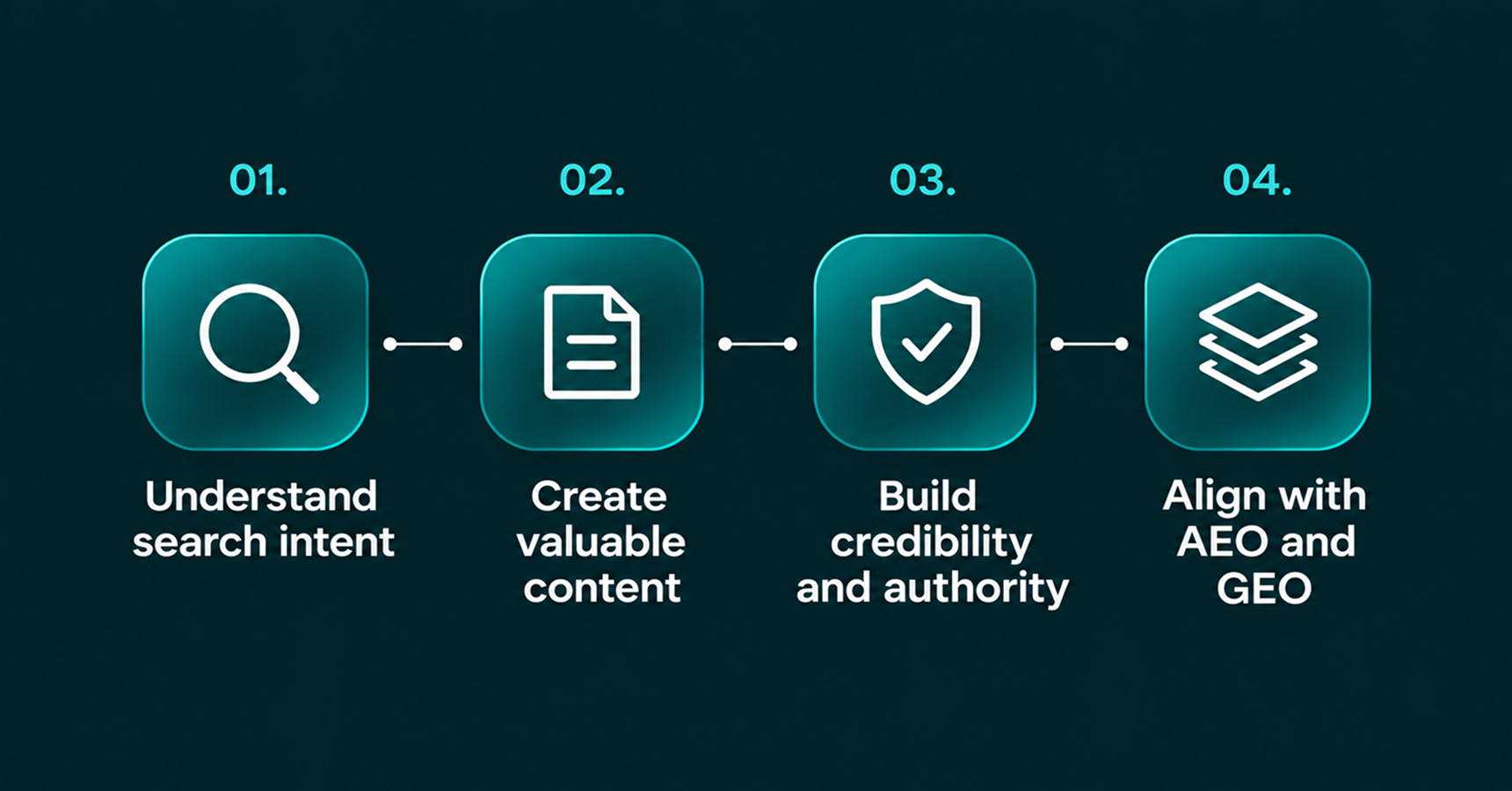
1. Focus on Search Intent
Understanding what users are actually looking for is one of the most important aspects of a successful SEO strategy.
Instead of simply targeting high-volume keywords, businesses should identify the questions, problems, and requirements of their target audience.
For example, rather than focusing only on “web application development,” create content that answers questions such as what web application development involves, how much it costs, and when a business should consider a custom solution.
This approach helps create relevant content that serves users across different search experiences.
2. Create Informative and Well-Structured Content
AI-powered search platforms need to understand the information available on your website.
Creating clear, informative, and well-organized content makes it easier for both users and search engines to navigate your website.
Some useful practices include:
- Use descriptive headings and subheadings.
- Answer common questions directly.
- Break complex topics into smaller sections.
- Include relevant examples and explanations.
- Add FAQs to address specific user queries.
- Use structured data where appropriate.
Remember, the objective is not to write content specifically for AI tools. It is to create genuinely useful information that people can understand and trust.
3. Strengthen Your Website’s SEO
Although AI search is changing the discovery process, traditional SEO remains an important part of digital visibility.
Businesses should continue focusing on keyword research, technical SEO, website speed, mobile responsiveness, quality backlinks, and relevant content.
A well-optimized website provides a strong foundation for search engine discoverability.
It’s also important to ensure that your website is accessible to search engine crawlers, has a logical structure, and provides a good user experience.
4. Build Brand Authority and Credibility
When users research products or services, they want information from reliable sources. The same principle applies to AI-powered discovery.
Businesses should establish their expertise by publishing informative blogs, showcasing successful projects, sharing customer testimonials, and maintaining accurate business information across digital platforms.
For example, a software development company can build credibility by publishing technical insights, sharing case studies, and explaining how its solutions address real business challenges.
The more useful and credible your digital presence becomes, the better positioned your brand is to earn visibility and recognition.
AEO and GEO in Action: How We’re Already Getting Results
AI search optimization isn’t just something businesses should prepare for in the future. It’s already creating opportunities for brands to improve their visibility and attract potential customers.
At LantroTech, we’ve been implementing Answer Engine Optimization (AEO) and Generative Engine Optimization (GEO) strategies for one of our clients to improve their visibility across leading AI-powered platforms.
And the results are already showing!
Our optimization efforts have helped the client secure top-three positions across all major AI assistants we’re tracking, including ChatGPT, Gemini, Google AI Overviews, Microsoft Copilot, Perplexity, Grok, DeepSeek, and Claude.
Here’s a look at the current AI visibility results:
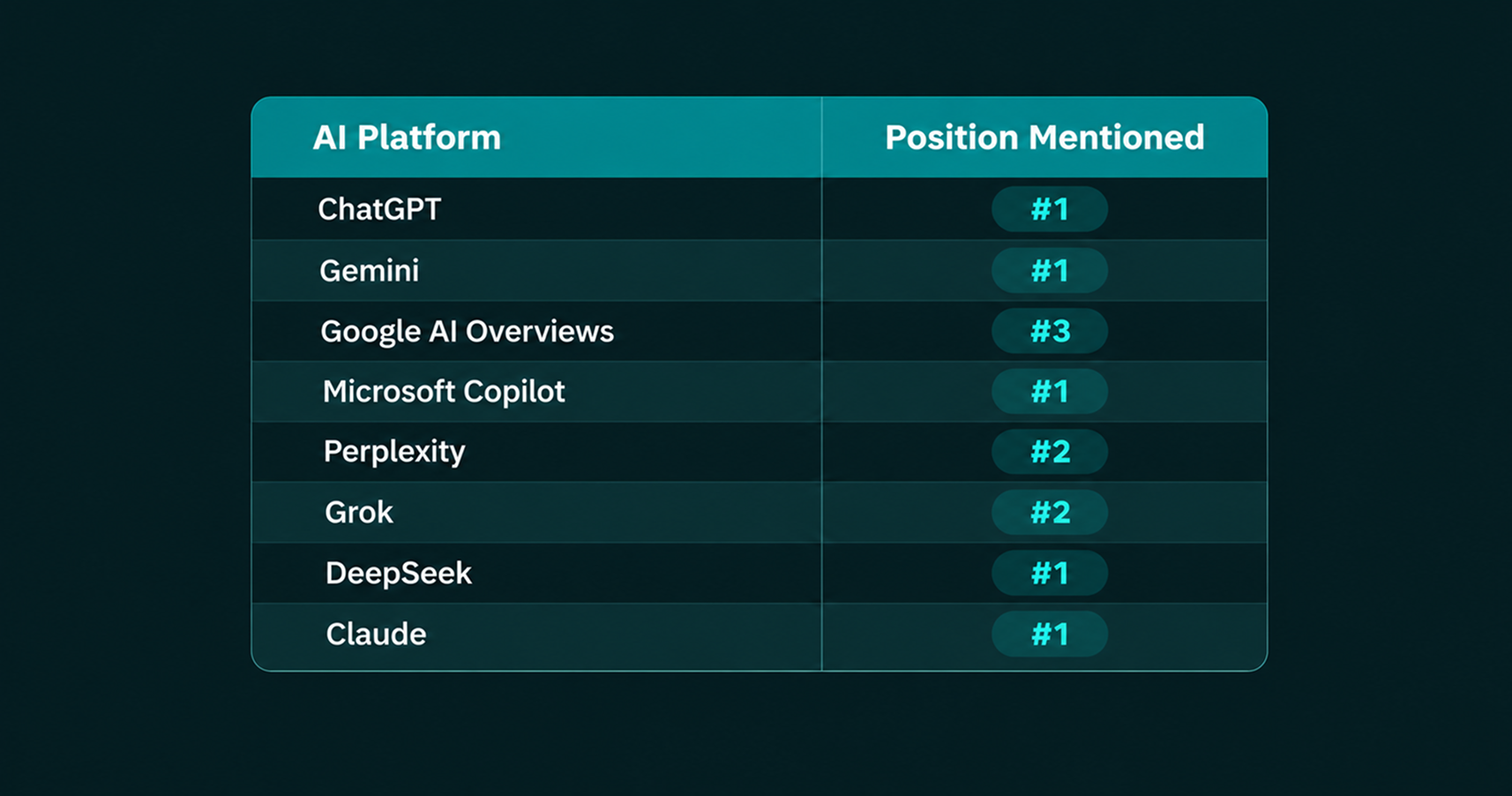
Beyond visibility, we’re also seeing an increase in traffic coming from AI platforms, and that traffic has already generated conversions for the client.
This is an important milestone because it shows that AI search visibility can go beyond brand mentions. It can bring potential customers directly to a business and contribute to actual conversions.
For businesses, this highlights an opportunity to look beyond traditional search rankings and start building visibility where their audiences are increasingly searching for information.
At LantroTech, we’re actively helping businesses adapt to this shift by combining traditional SEO practices with AEO and GEO strategies that focus on improving discoverability across both search engines and AI-powered platforms.
What’s Next?
While nobody can predict exactly how search will evolve, one thing is clear: businesses that understand changing user behavior and adapt their digital marketing strategies accordingly will be better positioned to stay ahead.
At LantroTech, we believe in keeping up with the latest digital trends and helping businesses strengthen their online presence through effective digital marketing strategies. Whether it’s SEO, AEO, GEO, or content marketing, the goal remains the same: helping your business get discovered by the right audience.
Share it on


