Estimation & Design
The Evolution of IT Cost Estimation Through Automation
LantroTech Estimation and Design
October 28, 2026

IT costs and low-voltage estimation runs on one currency: time. Every hour spent counting data outlets, measuring cable runs, and entering quantities into spreadsheets leaves less time for preparing bids, reviewing project costs, and taking on new opportunities.
At LantroTech, our preconstruction teams work inside this reality daily. We help contractors replace slow manual processes with fast digital workflows.
For decades, estimators relied almost entirely on rulers, highlighters, and spreadsheets. Today, digital and automated tools are reshaping preconstruction in clear phases.
Structured cabling estimation has moved through three distinct eras:
- A manual past
- A digital takeoff phase
- The current era of automated estimation
Understanding what changed at each stage reveals where preconstruction stands today.
The Manual Era of Rulers, Highlighters, and Redone Work
In early days, estimators completed five separate stages by hand.
First came plan skimming. Estimators read every plan precisely to highlight patch panels, main distribution frames, intermediate distribution frames, and riser routes.
Next came takeoff. Estimators traced cable paths with scales and rulers, manually counting faceplates, drops, and termination points.
Next, the quantities go into Excel spreadsheets, entered line by line. Vendors then receive requests for pricing, and quotes can take days to arrive. Only after that can the final proposal be prepared and submitted.
Manual structured cabling estimation was slow and unforgiving. A missed cable run, a mistyped device count, or a wrong labor rate could ruin a bid.
A single design change forced estimators to redo days of work from scratch. Skipping one page could cost thousands of dollars in missed site materials.

The Shift to Digital Takeoffs
The shift to software did not remove manual counting. Instead, it made the takeoff process faster and reduced the paperwork.
On-screen takeoff softwares allow estimators to click directly on digital plans, automatically calculating footage and device totals.
Digital markup tools like Bluebeam Revu replaced paper highlighters. An estimator could search an entire digital set for keywords in just a few seconds.
Excel remained the core of the bill of materials compilation. However, teams could now share spreadsheets across network drives instead of locking them on one desk.
Project management platforms like Procore centralized drawings, RFIs, submittals, and changes. Revised drawing sets appeared as flagged updates rather than forcing a full redo.
This digital transition created real efficiency gains. For a standard single-floor structured cabling buildout, this workflow reduced a 10 to 15 hour manual estimate down to roughly six to nine hours.
Documentation became faster, but human eyes and hands still had to identify and click every symbol on every page.
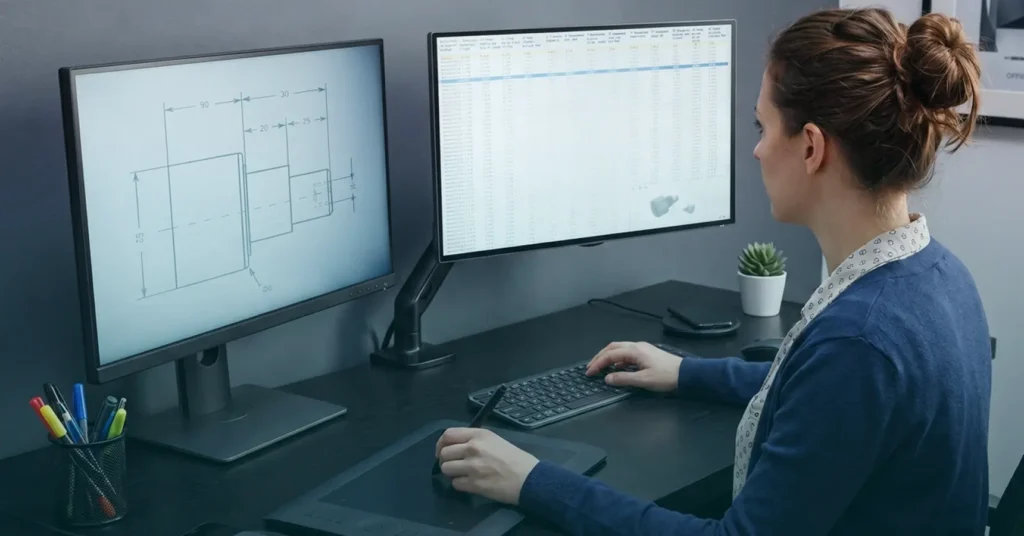
Automated Takeoffs for Faster Estimation
The current shift in preconstruction estimation changes the work entirely.
Instead of an estimator finding every symbol, modern software scans the drawing sets automatically. The system recognizes symbols and delivers a detailed pre-built count for quick verification.
Takeoff softwares use computer vision to detect low-voltage devices, light fixtures, and room boundaries directly from PDF files.
Advanced softwares can also generate cable routes, determine wire sizes, and export quantity reports to Excel. Some softwares include quality checks to verify quantities before finalizing the project takeoff proposal.
Specialized estimation softwares use takeoff quantities alongside labor rates and material cost databases to calculate overall project costs.
Other platforms link 2D and 3D quantity takeoffs directly to Building Information Modeling files. Design changes automatically update cost estimates without manual recounts.
On active job sites, computer vision tools compare actual field installations against 3D models. This catches mislocated drops early and provides real-time feedback on original estimate accuracy.
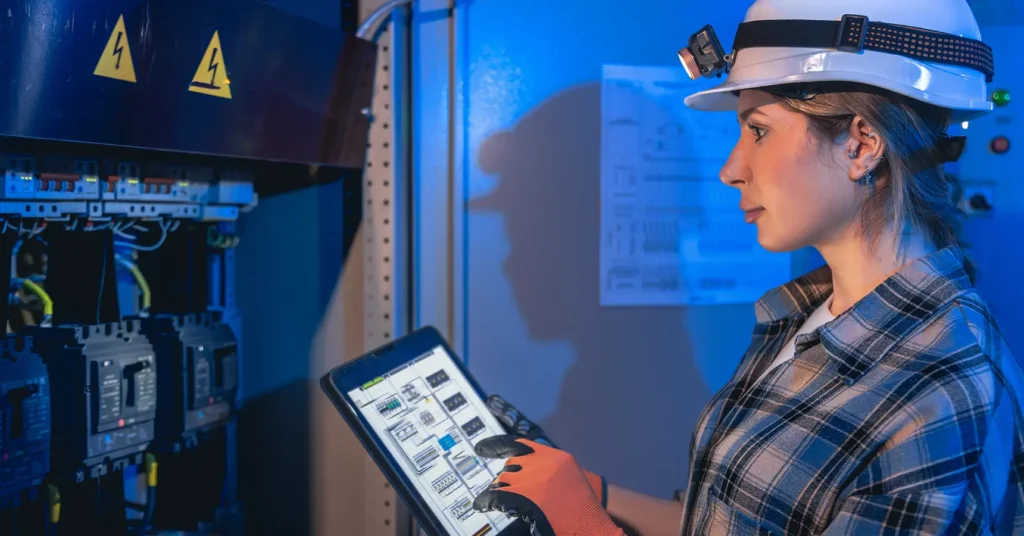
Real World Testing and Practical Findings
Testing automated tools on live projects shows clear value, but software does not replace trained estimators.
Automated software can detect clear symbol patterns on clean drawings. However, it struggles with dense schematics, non-standard notation, and complex design gaps.
Unclear specifications, duplicate symbols, and drawing errors still require human judgment. Estimators must review, correct, and validate every automated output before bid submission.
Automation functions best as an assistant rather than a replacement. It handles the tedious task first by counting symbols, tracing paths, and organizing data.
This hands the estimator a structured draft to refine rather than a blank page. That shift moves the work from generating raw numbers to interpreting project data, speeding up bid delivery while keeping human oversight intact.
How Automation Transforms Every Stage
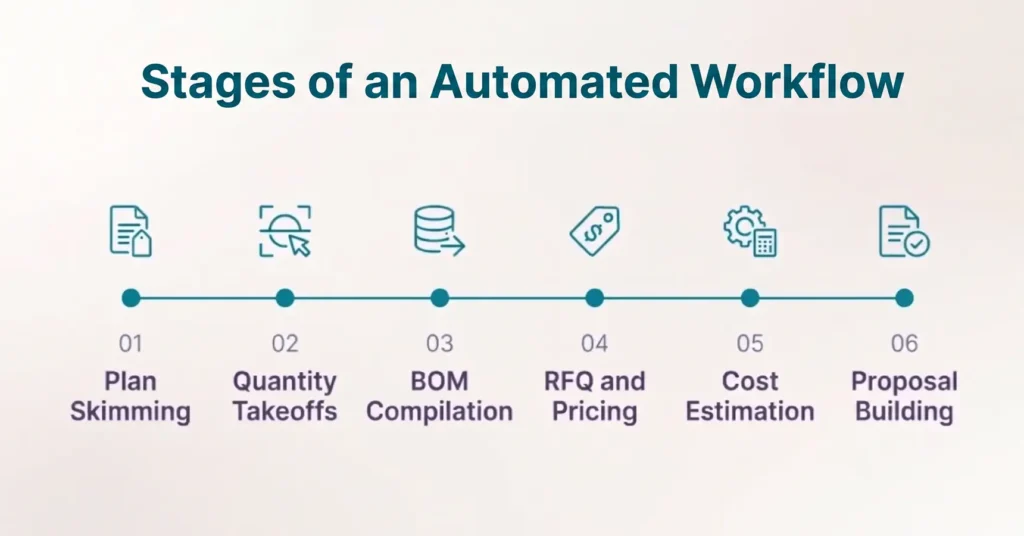
Comparing traditional workflows against modern automation shows clear time savings across every stage of structured cabling estimation:
- Plan Skimming: Automated tools scan and tag relevant IT sheets in minutes, letting estimators start from a filtered view.
- Quantity Takeoffs: AI symbol counts reduce takeoff time to a quick review phase, where estimators check for missed items.
- BOM Compilation: Exporting takeoff data into spreadsheets happens instantly once quantities are confirmed.
- RFQ and Pricing: Built-in pricing libraries populate current unit costs automatically, leaving estimators to handle substitutions.
- Cost Estimation: Applying labor units and markups occurs automatically once quantities are locked.
- Proposal Building: Reviewing an automated draft replaces hours of manual typing, letting estimators refine project scope quickly.
Real World Breakdown: Single Floor Structured Cabling Bid
Consider a standard low-voltage project: a single office floor with an MDF/IDF buildout, fiber and copper riser infrastructure, and horizontal cabling to voice and data drops.
Estimated by hand, the timeline breaks down as follows:
- 1 hour reviewing and cross-referencing drawings
- 6 to 8 hours tracing risers, horizontal runs, and counting outlets
- 3 hours building the bill of materials in Excel
- 2 to 3 hours applying labor costs and drafting the proposal
This equals 12 to 15 hours of manual work spread across two to three business days.

Using an automated IT estimation workflow, the timeline drops sharply:
- Plan reviews take minutes because software tags relevant IT sheets automatically.
- Takeoff shrinks to 1 or 2 hours of verifying automated counts.
- Bill of materials compilation and pricing take under an hour after export.
- Final costing and proposal assembly require about one hour using preset markup rules.
The total time drops to 3 or 4 hours, a total time reduction of 70 to 80 percent without removing human oversight.
Smarter Preconstruction and Scalable Growth
Automated tools make an estimator’s experience more valuable.
By removing the hours spent on counting symbols and typing numbers, estimators can focus on reviewing project assumptions, finding design conflicts, and building stronger client relationships.
Firms adopting these workflows submit more bids each week. They absorb design addenda without redoing days of work, backing up their pricing with clean, reliable documentation.
IT cost estimation has evolved from paper scale rulers to on-screen clicks and automated assistance. Modern preconstruction technology handles the heavy lifting, but the estimator still makes the final call.
At LantroTech, we provide IT and low-voltage estimation services to help contractors streamline takeoffs, improve cost accuracy, and prepare bids with confidence. Connect with our team to simplify your next estimation project.
Share it on


